The Role of CAD Design in Modern Media Rooms and Home Cinemas

Updated: Dec 19, 2025

Computer-Aided Design (CAD) has become an essential part of creating high-quality media walls, home cinemas, and listening rooms. By using CAD, designers can plan spaces with exceptional precision, explore ideas in three dimensions, and ensure that what’s built in reality matches the original design exactly.
Visualising the Space
One of the main advantages of using CAD is the ability to model a room extremely accurately before any construction begins. Every wall, panel, and piece of equipment can be represented to scale, allowing the designer to understand how the layout, sightlines, and acoustics will work together.
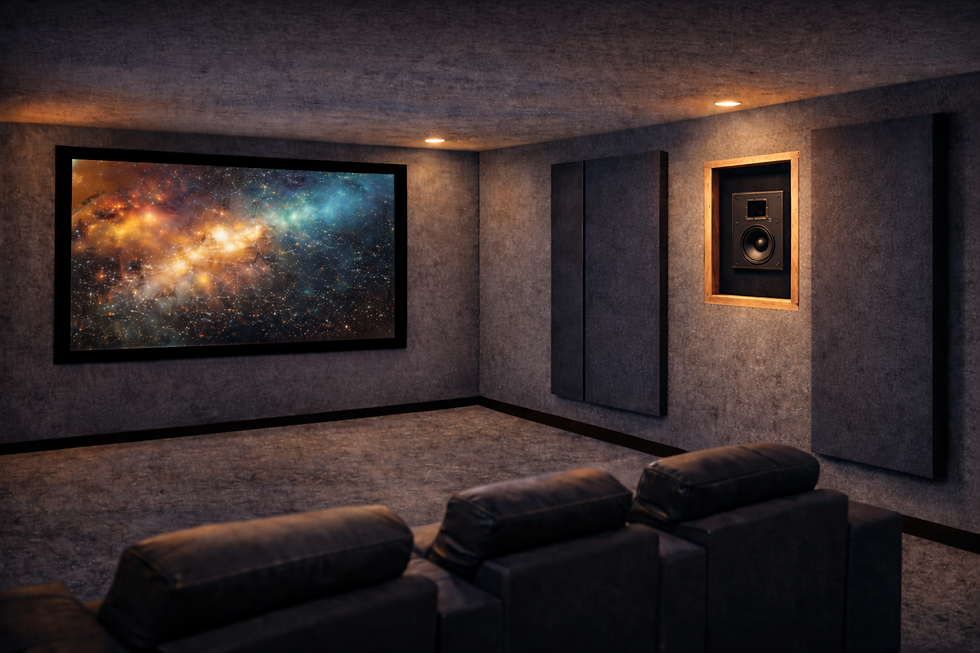
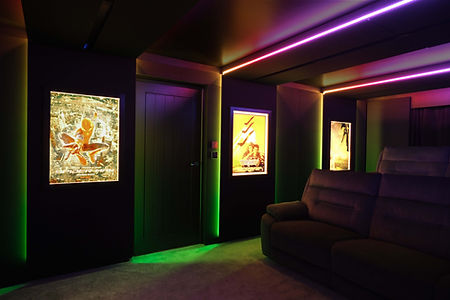
From these digital models, it’s possible to produce photo-realistic renders that show the finished space in fine detail — including lighting effects, finishes, and furniture placement. Many designers also use virtual reality (VR) tools, giving clients the ability to take a virtual tour of their future room using VR goggles. This interactive approach helps clients fully understand the design and make informed decisions about layout, finishes, and features before fabrication begins.
Precision Manufacturing
Once the CAD design is approved, it can be exported directly to CNC (Computer Numerical Control) machinery for production. CNC manufacturing offers extremely high accuracy, ensuring that each panel and component fits precisely as intended.
This method greatly reduces the potential for on-site errors and allows for a clean, efficient installation process. It also makes it possible to achieve a very high standard of fit and finish — something that’s difficult to achieve with traditional manual methods.
Design Flexibility and Creativity
Another benefit of CAD-based design is the creative freedom it offers. Because designs are built digitally first, complex structures, concealed cable routes, and custom features can be explored and refined early on. This enables more ambitious and visually striking solutions, without compromising practicality or performance.
In Summary
The use of CAD and CNC technology in media room and home cinema design provides a number of clear advantages:
A highly accurate representation of the finished room before work begins.
The ability for clients to review and adjust designs using renders or VR tours.
Exceptional precision and quality during manufacturing and installation.
Greater design flexibility and creative potential.
In short, CAD-based design brings together technology, accuracy, and imagination — helping ensure that the finished result performs as beautifully as it looks.

We are audio visual specialists who have been delivering luxury technology solutions for residential spaces in the UK since 2010.
Find out more about our range of home services and recent projects.